
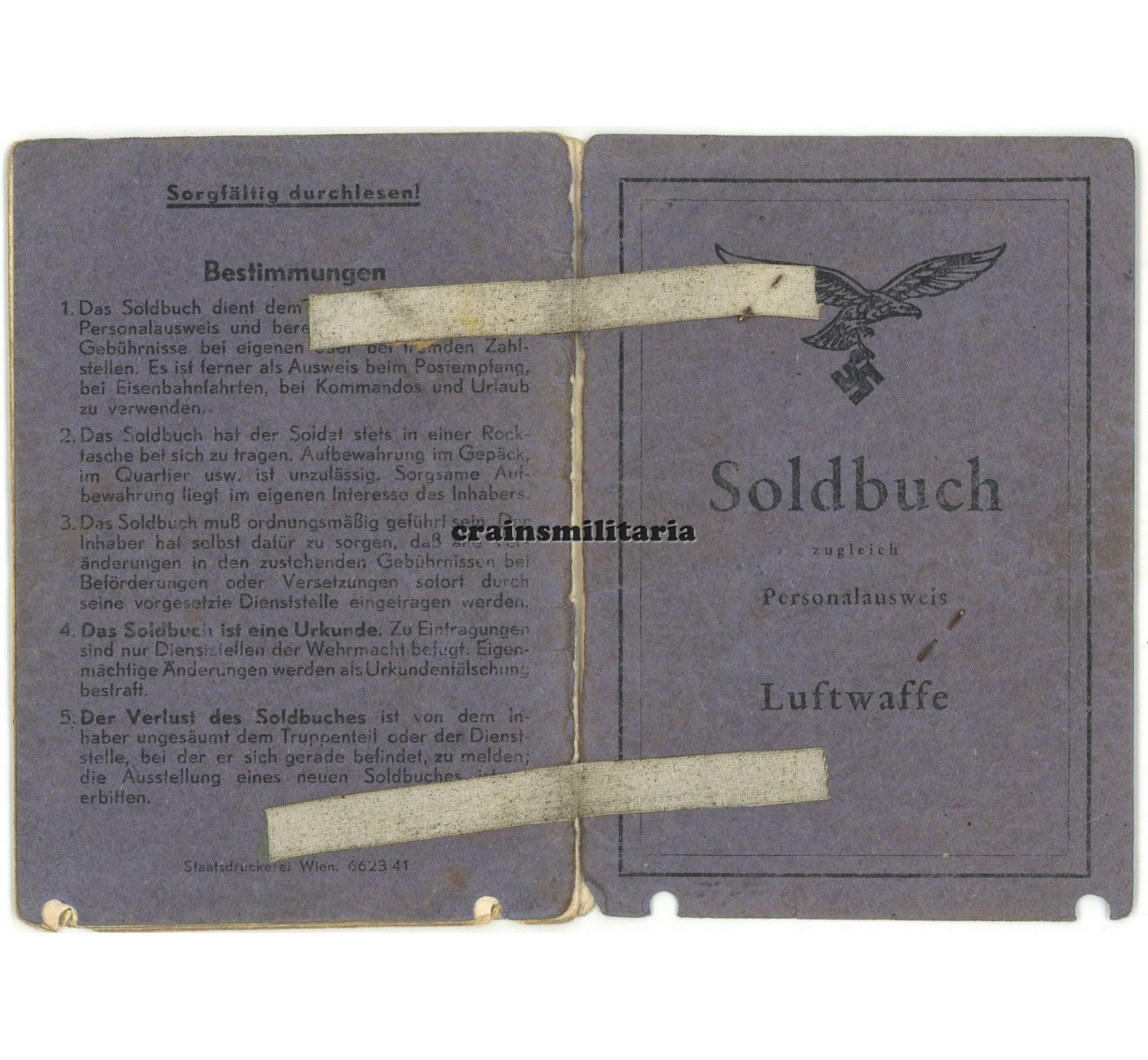









Soldbuch and (award) document grouping to Oberfeldwebel Georg Schönsteiner. Originally trained as a Bordmechaniker since he was a mechanic in daily life, Schönsteiner also followed Bordschützen training. He was deployed in the air bases of Prenzlau, Dresden, Fürstenfeldbruck and Tulln, before joining the 13. Staffel of Kampfgeschwader 3 in July 1944. But not much later, like many other "surplus" Luftwaffe personnel, he switched to the Fallschirmjäger branch with one of the ad-hoc FJ battle groups on the Western Front.
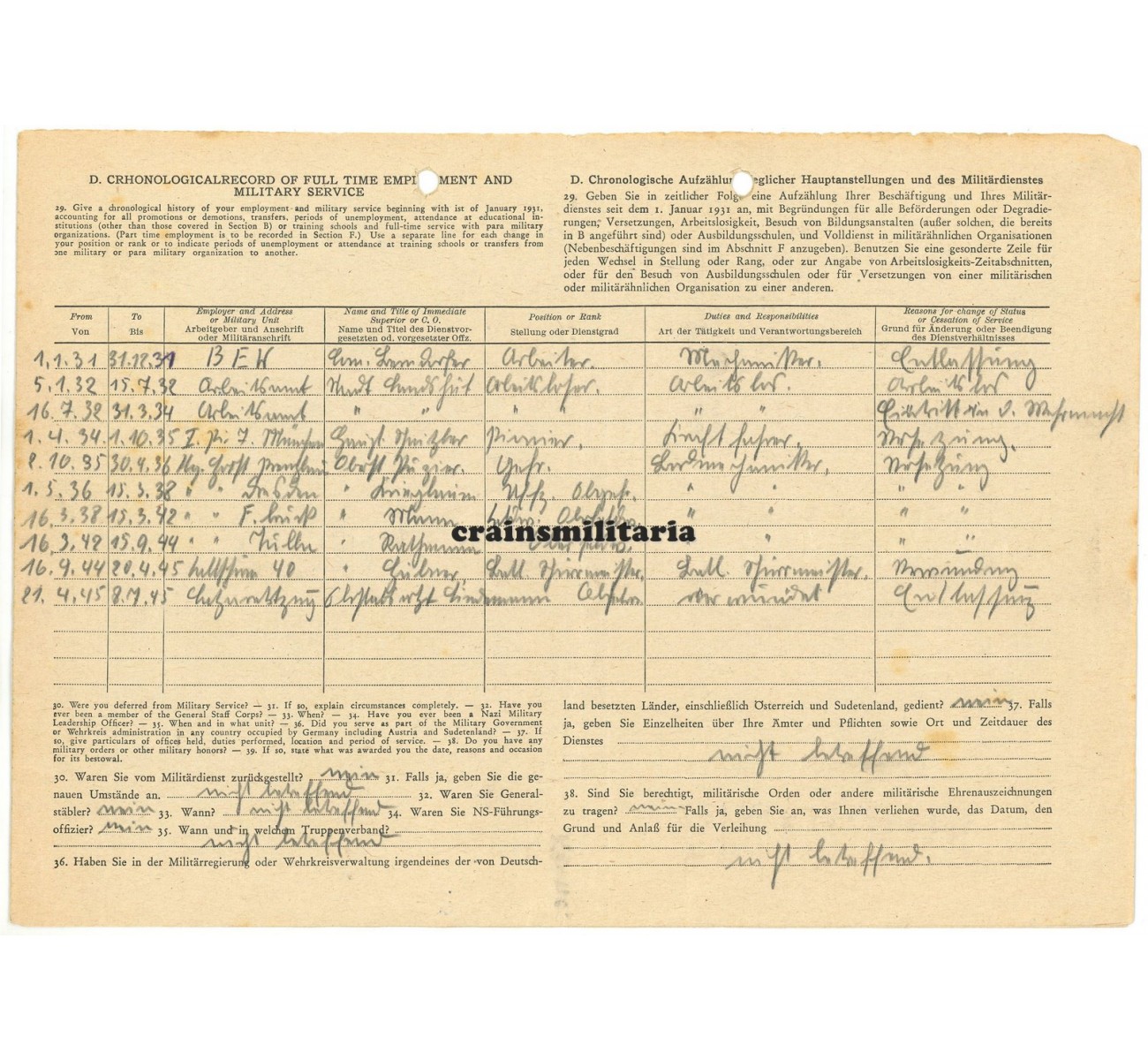
The Soldbuch was not fully updated during the chaotic retreat in the West, but the postwar summary of his career confirms he joined Kampfgruppe Hübner, active in Belgium and Holland, on 16th of September 1944, during the fighting in the area of Stokkem, on the Maas-Schelde canal on the Belgian-Dutch border. January 1945, he was still with Fallschirmjäger-Regiment Hübner in Holland, fighting for the village of Sint-Joost near Roermond. On 30th of January 1945, the Soldbuch confirms a KVKII mit Schwertern attributed by "Fallsch.-Kampfgr. Wadehn", referring to Generalmajor Walter Wadehn as commander of the 8. Fallschirmjäger-Division.
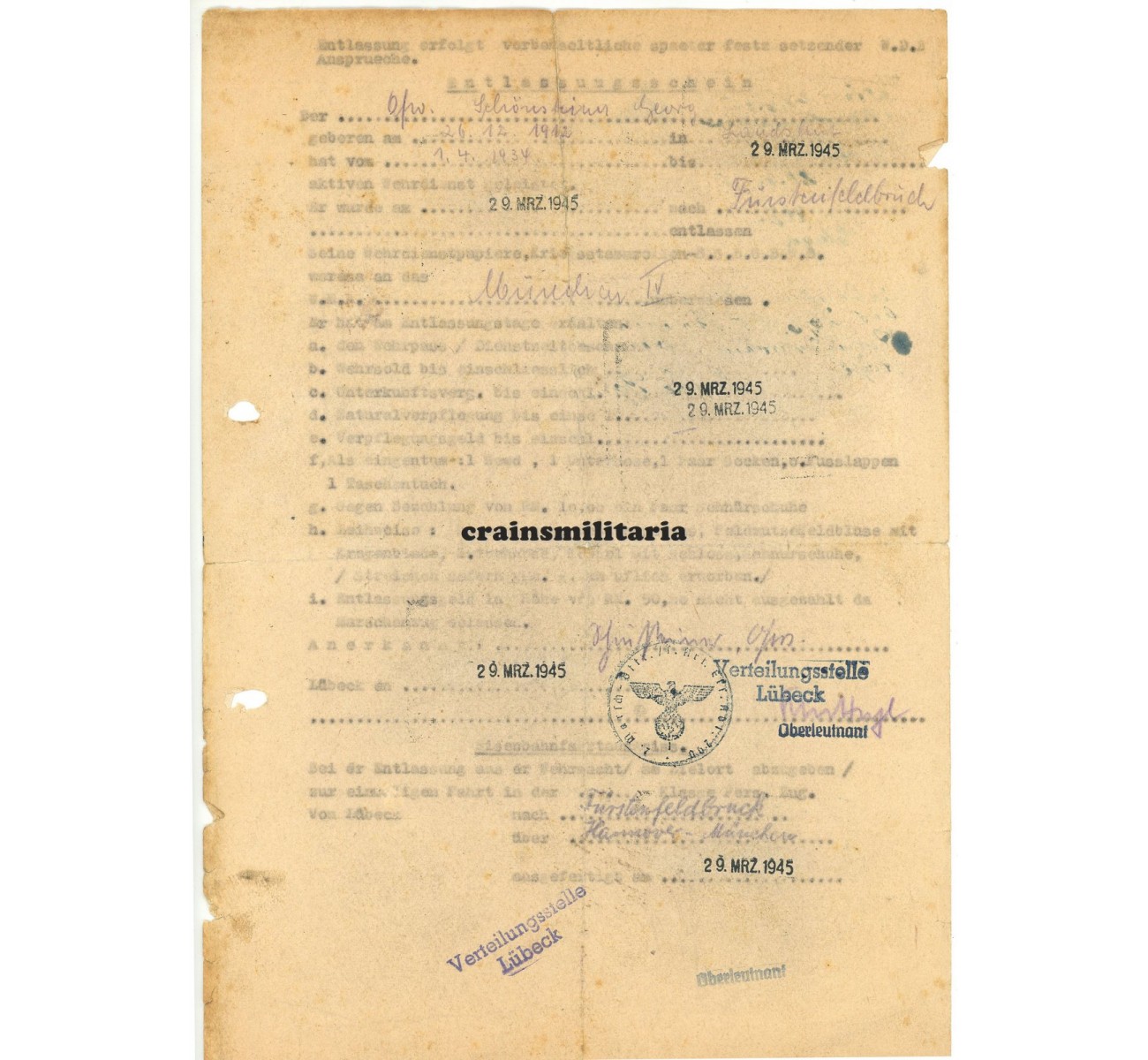
The Feldpost stamp in this award entry refers to I./Fj.Rgt.24: early 1945, the Kampfgruppe Hübner was indeed reformed into Fallschirmjäger-Regiment 24, first still under command of Oblst. Hübner, later under Major Zander fighting in the Dutch-German border area. On 28th of February 1945, while still fighting with 1./Fj.Rgt.24, Schönsteiner was wounded by shrapnel in Dinxperlo, near Aalten on the Dutch side of the border. He was evacuated to the Kriegslazarett in Schloss "Het Loo" near Apeldoorn. Following his recovery, he was released from service late March 1945.
Apart from the KVKII, Schönsteiner also received the DRL Sportabzeichen in Bronze, the Dienstauszeichnung IV. Klasse, the Fliegerschützenabzeichen and presumably also the Verwundetenabzeichen in Schwarz (not entered in the Soldbuch). The grouping consists of:
- Soldbuch, Zweitschrift issue from March 1943, with many interesting entries including Fliegerkopfhaube, Fallschirmjäger uniform and Tarnjacke. Pages are loose, page 17/18 is missing.
- Luftwaffenbordmechanikerschein, May 1940, complete with portrait photo and several high officer signatures, plus confirmation of his Bordschützen training in Rahmel, June 1944.
- Rollschein, March 1943, allowing him to maneuver airplane types like Ju 52, Do 17, He 111 and the captured French Caudron C-445.
- Award confirmation of the DRL Sportabzeichen in Bronze, July 1939.
- Award document for the Dienstauszeichnung IV. Klasse, April 1938.
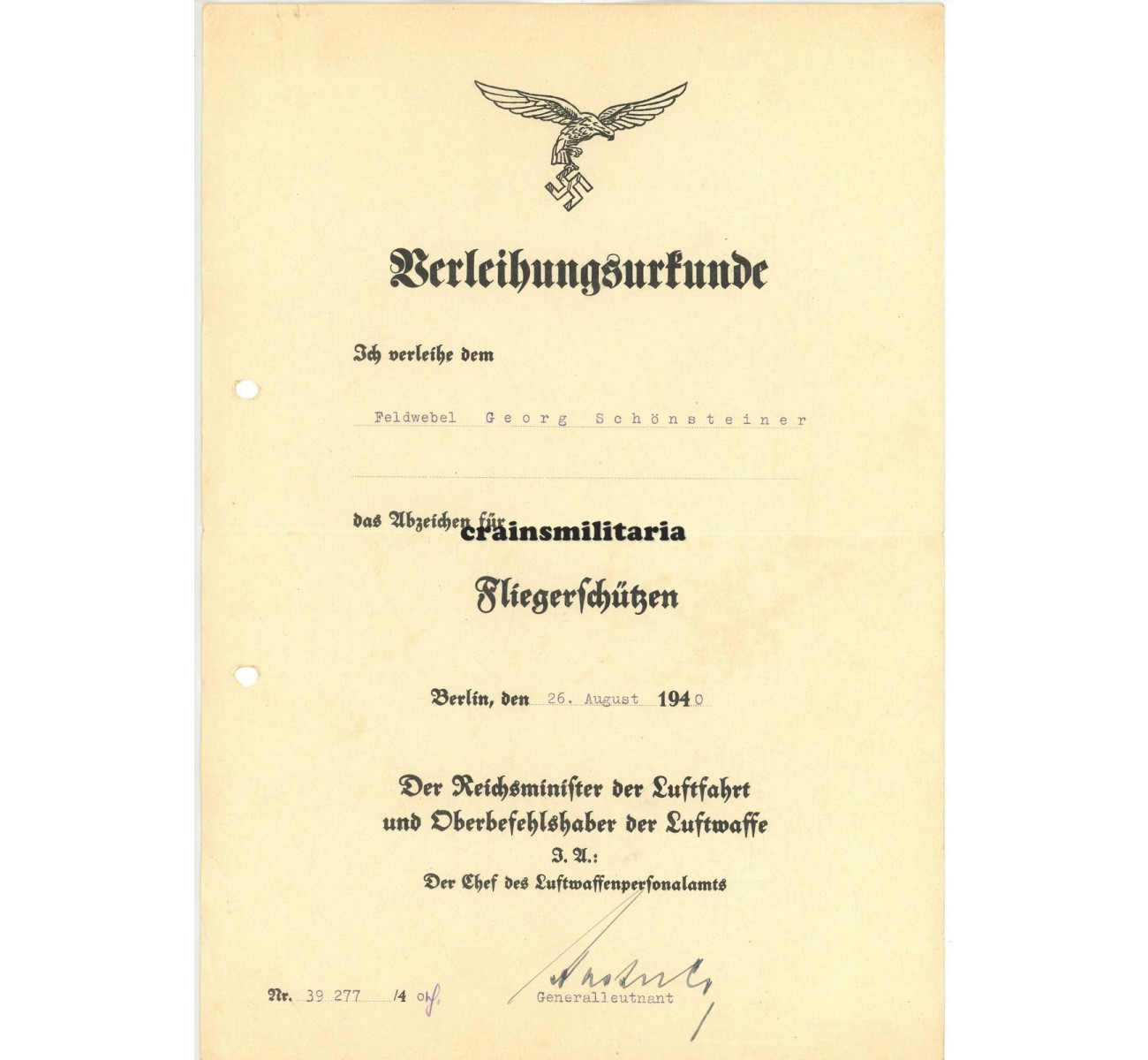
- Award document for the Fliegerschützen-Abzeichen,August 1940, hand signed by Generalleutnant Gustav Kastner-Kirdorf, DKiS winner.
- Promotion documents to Feldwebel, June 1939 and to Oberfeldwebel, June 1941, the latter hand signed by Oberst Georg Fitze, later Generalmajor.
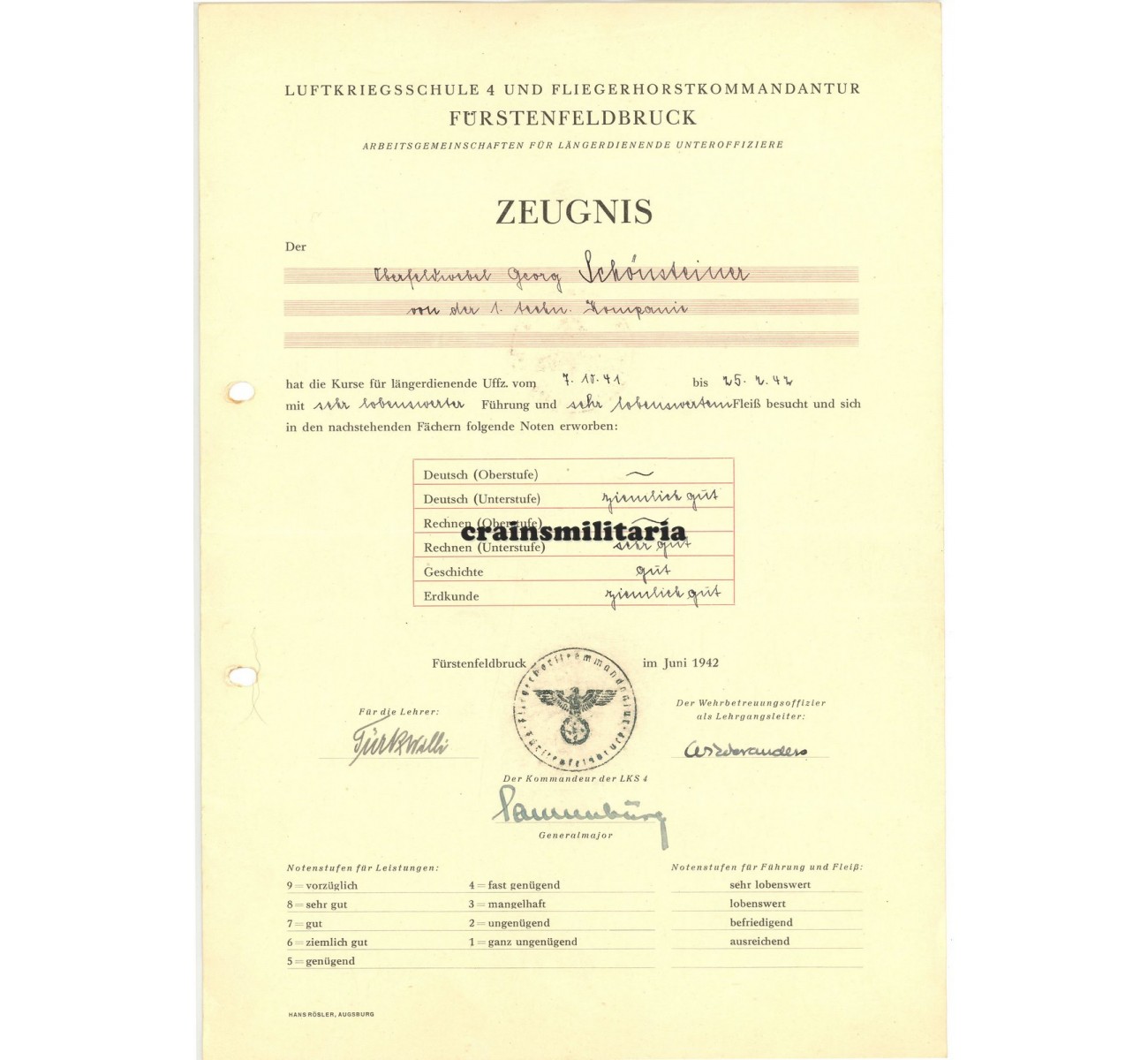
- Zeugnis by the Luftkriegsschule 4 in Fürstenfeldbruck, June 1942, hand signed by Generalmajor Herbert Sonnenburg.
- Krankenblatt by Kriegslazarett 4/686 in Het Loo, March 1945, with interesting details on his wound while with Fj.Rgt.24.
- Entlassungsschein, March 1945.
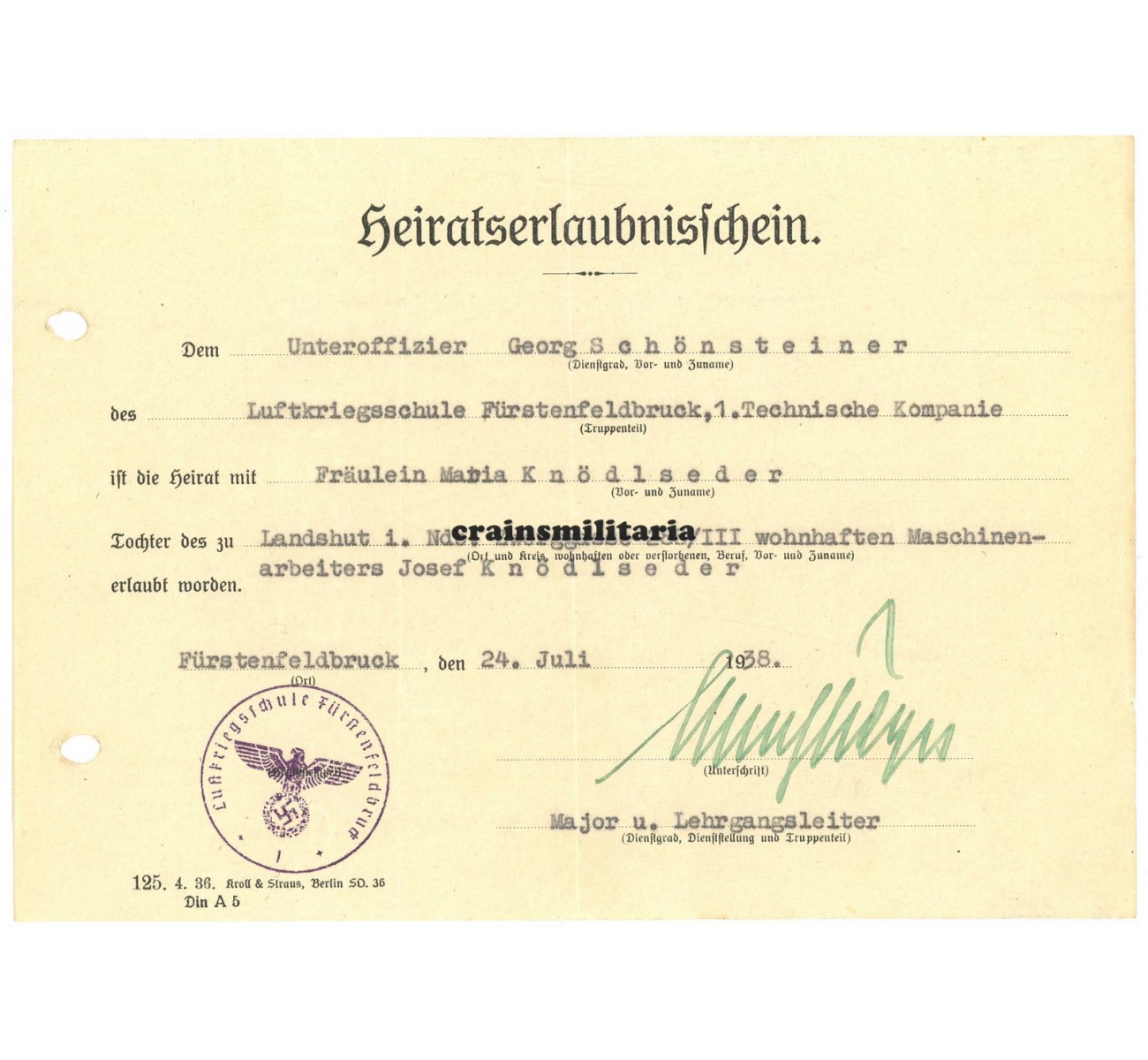
- Four more wartime documents including the permit for his wedding and his 12 years voluntary service document.
- POW Discharge document, July 1945.
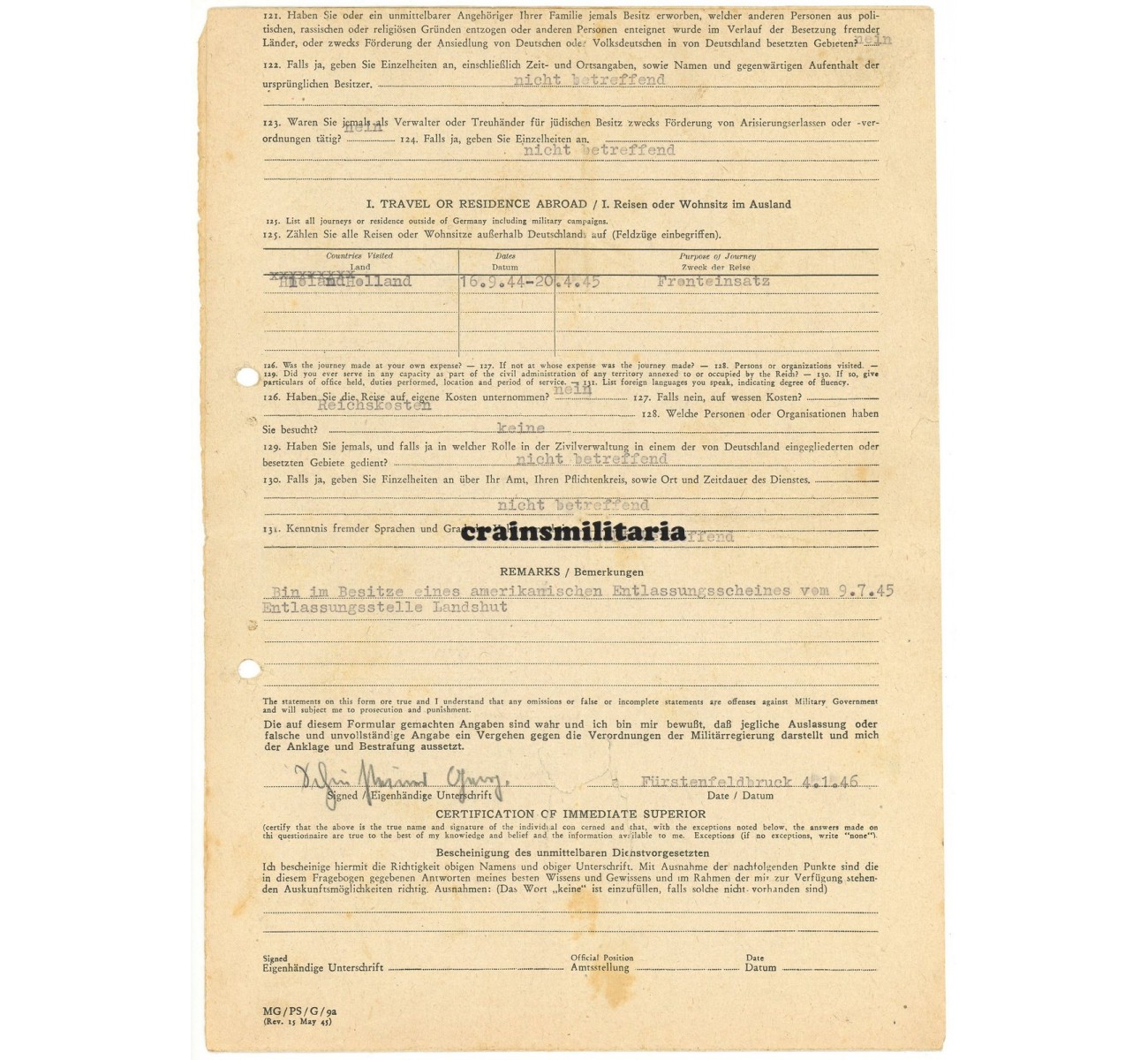
- Six page "Fragebogen" by the Military Government of Germany, with complete summary of his civilian and military careers. Notice the "Fronteinsatz - Holland - 16.9.44 - 20.4.45" entry.
Large grouping to one of the most sought after Holland related Fallschirmjäger units!
Holland WIA Fallschirmjäger Soldbuch grouping
- Product Code: DP8090